
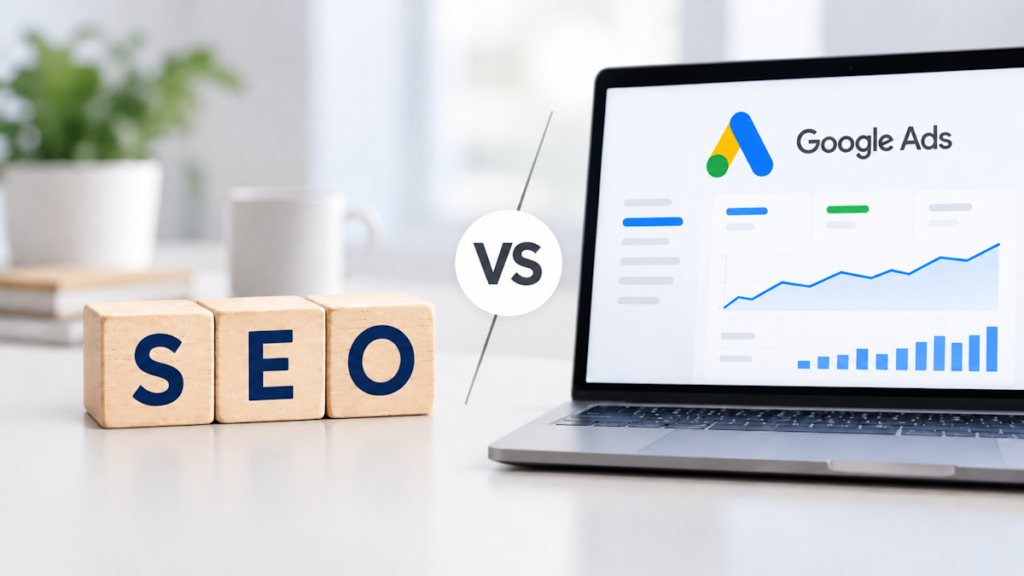
SEO vs Google Ads is a common decision for South African businesses that want more enquiries but cannot invest heavily in every marketing channel at once. Both can place your business in front of people using Google, but they work differently and solve different timing problems.
Google Ads can create visibility soon after a campaign launches, provided there is active demand and the campaign is set up properly. SEO usually takes longer because your website must be crawled, understood and assessed before stronger visibility develops. Its value lies in building a search presence that is not dependent on paying for every click.
If you need a simple answer, choose Google Ads when speed and controlled targeting matter most. Choose SEO when you want to build lasting visibility and can invest consistently over time. If the budget allows, the strongest approach often uses paid search to capture current demand while SEO develops the website’s longer-term reach.
SEO vs Google Ads: what is the real difference?
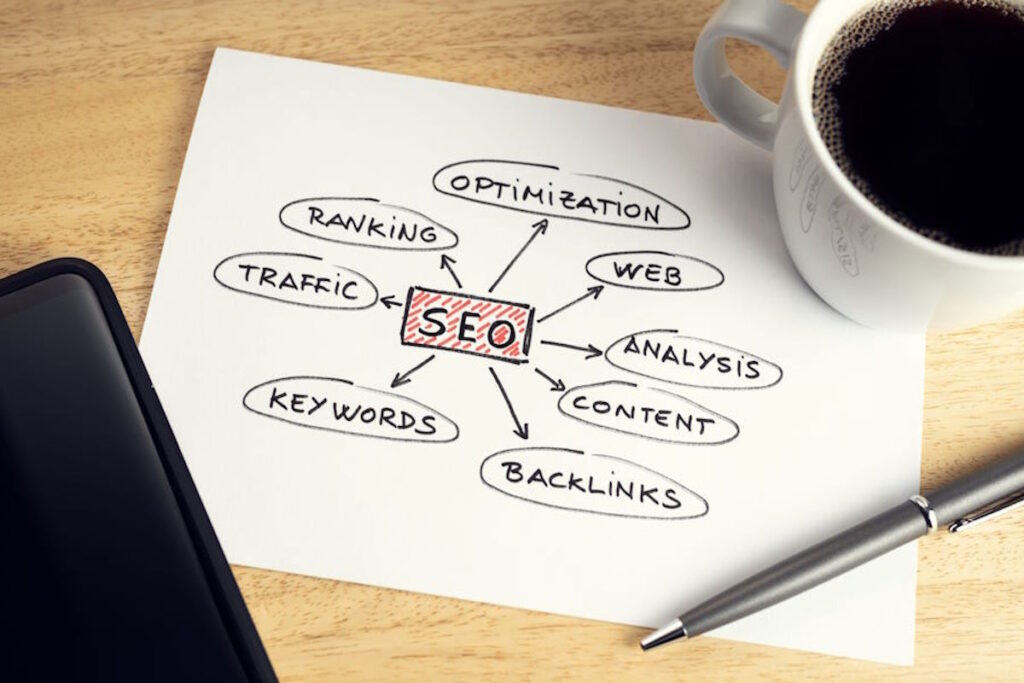
SEO, or search engine optimisation, improves your website so search engines can understand its pages and users can find useful answers. The work may include technical improvements, search-focused content, internal linking, page speed, local relevance and better site structure.
Google explains that SEO helps search engines understand content and helps users decide whether to visit a website from search results. Google also makes it clear that no method can guarantee a first-place ranking.
Google Ads is paid advertising. Search campaigns can display ads when people search for terms connected to your products or services. Advertisers select targeting, write ads, set budgets and send visitors to relevant landing pages.
The practical distinction is straightforward:
- SEO earns organic visibility by improving the website and its content.
- Google Ads buys opportunities to appear through an advertising auction.
- SEO progress can continue producing visits after the initial work.
- Paid visibility depends on an active campaign and available budget.
- Both still need a useful website and a clear customer offer.
Neither option automatically produces profitable leads. Search visibility gets someone to the website. The page still needs to explain the offer, build trust and give that person a clear next step.

When is Google Ads the better first investment?
Google Ads is often the stronger starting point when a business needs to test or capture demand quickly. A campaign can target specific services, locations, devices and search terms without waiting months for organic visibility to develop.
It can suit South African businesses that:
- Need enquiries for an established service now
- Are launching a new offer or entering a new region
- Want to test which messages attract qualified prospects
- Operate in a market where customers actively search before buying
- Have a focused landing page and reliable enquiry process
- Can fund both media spend and professional campaign management
Google does not simply award the best position to the highest bidder. Its ad auction considers factors that include the bid, competition, search context, expected effect of ad assets, and the usefulness and relevance of the ad and landing page.
Did you know? A competitor with a higher bid does not automatically win the stronger position. Relevant ads and a useful landing page also influence whether and where an ad may appear.
That makes the website part of the advertising investment. Sending paid visitors to a slow home page with vague copy can waste good traffic. A dedicated landing page should match the search, explain the service and make contacting the business simple.
Google Ads also requires active management. Search terms, targeting, bids, adverts and conversion data need regular review. Setting a campaign live and ignoring it is an impressively efficient way to pay for lessons you did not mean to buy.
When does SEO offer better long-term value?
SEO is usually better suited to businesses that want to strengthen their visibility across several related searches over time. It can help a company build useful service pages, location pages, guides and answers that support customers at different stages of their decision.
This approach can suit businesses that:
- Provide services people research before making contact
- Want to reduce reliance on paid traffic over time
- Need stronger local or national organic visibility
- Have specialist knowledge that can become useful content
- Plan to operate and market consistently for the long term
- Need technical improvements across an established website
SEO does not mean publishing random blog posts and hoping Google sorts it out. The website needs a clear structure, technically accessible pages and content that directly answers what the intended customer needs to know.
Google advises that search improvements may take anything from hours to several months to appear, depending on the change. It recommends waiting at least a few weeks before assessing whether work has produced a useful effect. That makes SEO less suitable when the business needs immediate lead volume from a new page.
SEO should be measured as an ongoing business channel. Useful indicators include organic clicks, impressions, relevant search queries, enquiries and the performance of important landing pages. Rankings can add context, but they should not be the only measure of progress.
Explore KOKIO’s SEO and website performance services if your website needs stronger technical foundations, content structure or search visibility.
SEO vs Google Ads: which costs more?
There is no universal answer because the two channels charge for different things. An SEO vs Google Ads cost comparison must account for both media spend and professional work. Google Ads has direct media costs. SEO does not charge you each time someone clicks an organic result, but strategy, technical work, content and ongoing improvement still require investment.
A Google Ads budget may include:
- The amount paid directly to Google for advertising
- Campaign planning and setup
- Keyword and audience research
- Ad writing and asset creation
- Landing-page development or improvement
- Conversion tracking and reporting
- Ongoing management and optimisation
An SEO budget may include:
- Technical and content audits
- Search and competitor research
- Website performance improvements
- Service-page and blog content
- Internal linking and site structure
- Local search improvements
- Monitoring, reporting and ongoing updates
Google Ads can become expensive in competitive categories because advertisers compete through an auction. SEO can also become expensive when a website has serious technical problems, weak content or strong competitors. A lower monthly fee is not automatically better value if the work cannot support the business goal.
Compare both options using cost per qualified enquiry and eventual customer value, not clicks or traffic alone. A channel that sends fewer but more suitable prospects may be commercially stronger than one producing a large volume of poor enquiries.
Which option is better for generating leads?
Google Ads often has the advantage when a business needs faster leads from people already searching for a specific solution. SEO can build a broader stream of discovery and high-intent traffic, but that normally takes longer.
Lead quality depends on more than the channel. It is shaped by:
- How closely the search matches the service
- Whether the website speaks to the right market
- The strength and clarity of the offer
- Pricing and competitive position
- Location and service availability
- Landing-page experience
- The speed and quality of follow-up
A poorly targeted paid campaign can attract irrelevant clicks. A broad SEO strategy can attract visitors who want information but are not ready to buy. Both need content that distinguishes research searches from commercial searches.
Measurement matters too. Google Ads conversion tracking can record valuable website actions such as enquiries or purchases. Google Search Console reports organic clicks, impressions, click-through rate and average position. Your wider reporting should connect these signals to real leads and sales wherever possible.
Should South African businesses use both?
Many businesses should, but not necessarily from day one. Using both works best when each channel has a defined role and the website can convert the traffic being generated.
Paid search can provide faster information about the words, services and messages that lead to action. Those insights can inform landing pages and the broader content plan. SEO can then build visibility around valuable topics and reduce the risk of relying on one paid channel for every visit.
A practical combined approach may look like this:
- Use Google Ads for priority services with clear commercial intent.
- Build or improve organic service pages around proven customer needs.
- Create useful supporting content for questions customers ask before buying.
- Compare lead quality across paid and organic search.
- Move budget according to evidence rather than assumptions.
The channels should support each other without being treated as identical. Paid campaign data can guide decisions, but organic search results will not mirror paid performance exactly. Each channel has different competition, placements and user behaviour.
Learn more about KOKIO’s digital marketing services if you need support with Google Ads, content and a connected marketing plan.

How should you decide where to start?
Start with the business problem, not a preference for a particular channel. The SEO vs Google Ads decision becomes clearer after assessing your goals, website and available resources.
Choose Google Ads first when:
- You need visibility and leads sooner.
- Customers already search for your service.
- You have a defined offer and suitable landing page.
- You can support continued advertising and management costs.
Choose SEO first when:
- You can invest over a longer period.
- Your website has technical or content weaknesses.
- Customers research several questions before contacting you.
- You want to build a wider search presence that supports future growth.
Use both when the business can fund immediate demand capture and long-term development without spreading the budget too thinly. If the website is slow, confusing or outdated, fix the most damaging problems before buying more traffic. Marketing cannot rescue an enquiry journey that gives visitors no good reason to continue.
Making the right search investment
Google Ads is usually the more practical first choice for a business that needs immediate, targeted visibility. SEO is generally the stronger long-term investment for building useful content, technical quality and organic reach. Neither is automatically cheaper or better in every situation.
The right choice depends on demand, competition, budget, timing and the readiness of your website. A considered SEO vs Google Ads strategy gives each channel a clear purpose and measures success by qualified enquiries and business value, not visibility alone.

FAQ
Which is better, SEO or Google Ads?
Google Ads is often better for faster visibility, while SEO is better for developing organic reach over time. The right choice depends on how quickly you need leads, whether people already search for your service, the condition of your website and how consistently you can invest.
Is SEO cheaper than Google Ads?
SEO does not charge for each organic click, but it still requires investment in strategy, content, technical improvements and monitoring. Google Ads includes direct advertising spend as well as setup and management. Compare the channels according to qualified leads and customer value rather than media cost alone.
How long does SEO take to work in South Africa?
There is no fixed period. Google says some changes can appear within hours while others may take several months, and it suggests waiting at least a few weeks before assessing impact. Website condition, competition, content quality and the searches being targeted all affect the timeline.
How quickly can Google Ads generate leads?
A campaign can begin creating visibility after it is approved and launched, but visibility does not guarantee enquiries. Results depend on search demand, targeting, budget, ad relevance, landing-page quality and conversion tracking. The campaign normally needs ongoing testing and adjustment before its performance can be judged properly.
Can SEO and Google Ads work together?
Yes. SEO vs Google Ads does not have to be an either-or decision. Paid search can capture current demand and provide quicker feedback, while SEO builds useful pages and organic visibility over time. Both should support the same commercial goals while being measured separately.
Should a new business start with SEO or paid search?
A new business with an established service and urgent lead target may start with a focused paid campaign. A business still refining its offer or website may benefit from fixing its content and search foundations first. The budget must also allow enough time and data to evaluate the chosen channel fairly.
If you are unsure where your marketing budget will have the greatest effect, discuss your website, SEO and Google Ads priorities with KOKIO. We can assess your current setup and recommend a practical starting point based on your goals.